Node API Overview

Node API is an implementation of standard RPC, REST, and gRPC interfaces to query endpoints across supported networks, enabling interaction with raw blockchain data over HTTPS and WebSockets. It supports project-level API keys, request monitoring, and detailed usage statistics for development and production workloads.
Transport Protocols
Node API supports two transport protocols: HTTPS for request-response interactions and WSS for persistent real-time subscriptions.
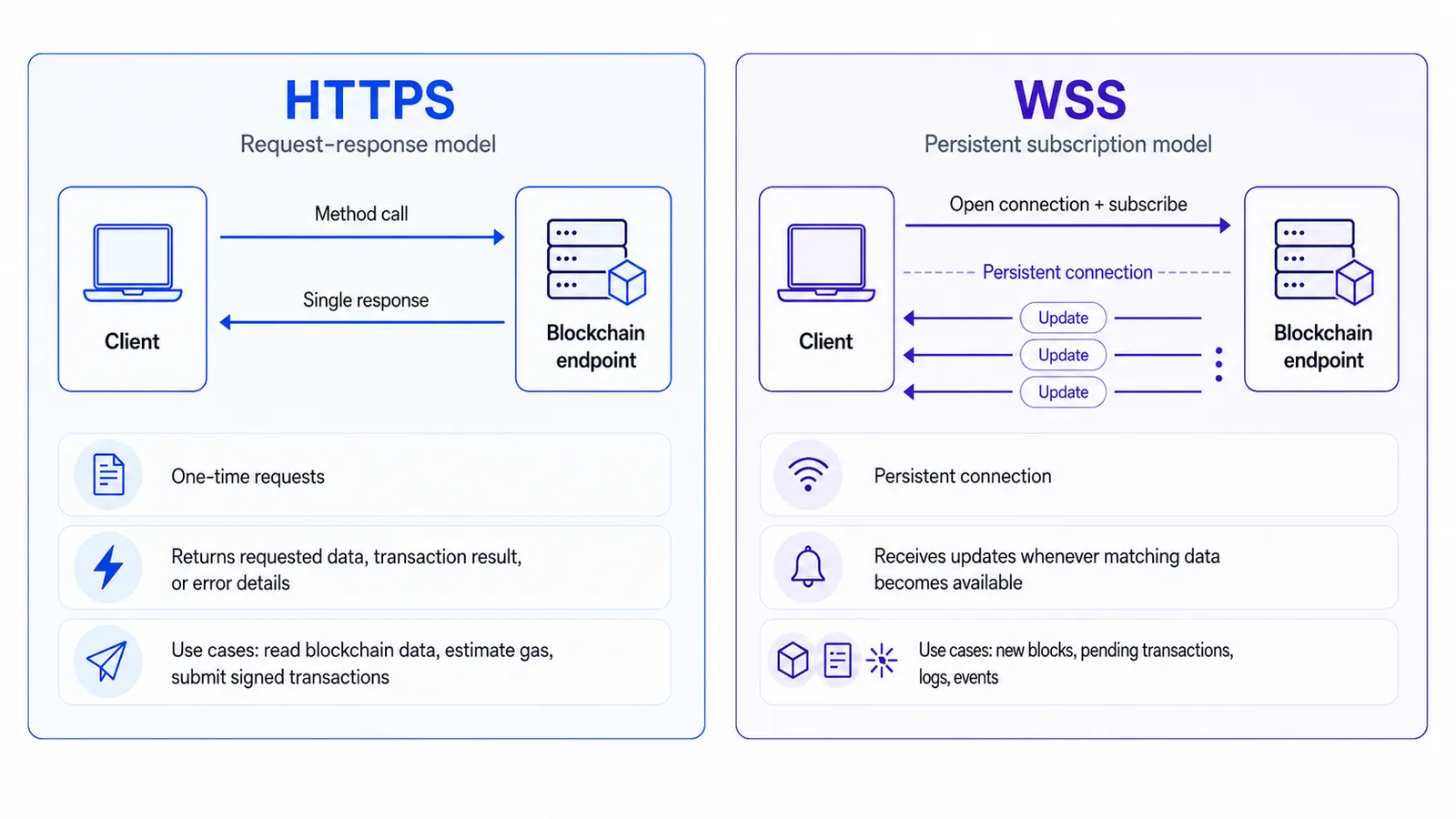
- HTTPS follows a request-response model. The client sends a method call to a blockchain endpoint with the required parameters and authentication details, and receives a single response with the requested data, transaction result, or error details. HTTPS is suitable for one-time operations, such as reading blockchain data, estimating gas, or submitting signed transactions.
- WSS follows a persistent subscription-based model. The client opens a WebSocket Secure connection to a blockchain endpoint, subscribes to specific events or data streams, and receives updates whenever matching data becomes available. WSS is suitable for real-time workflows, such as listening for new blocks, pending transactions, logs, events, or other chain updates without HTTPS polling.
Methods over HTTPS
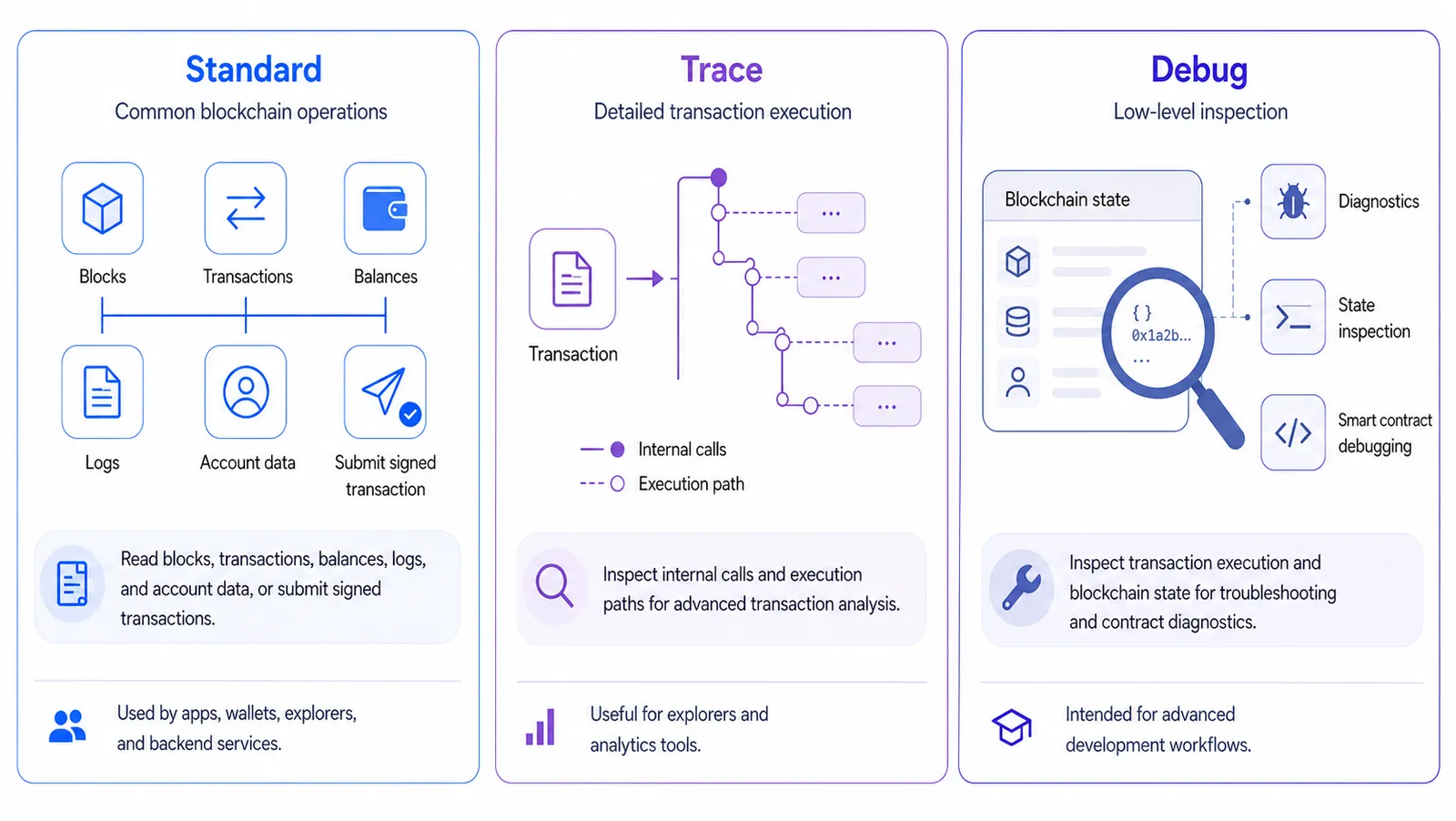
Node API supports the following HTTPS method groups for standard blockchain operations, execution tracing, and low-level diagnostics.
Standard API
Standard API methods provide access to common blockchain operations, such as reading blocks, transactions, balances, logs, and account data, as well as submitting signed transactions. This group covers the main methods used by applications, wallets, explorers, and backend services.
Trace API
Trace API methods provide detailed transaction execution data, including internal calls and execution paths. They are useful for explorers, analytics tools, and advanced transaction analysis.
Debug API
Debug API methods provide low-level inspection capabilities for transaction execution and blockchain state. They are intended for troubleshooting, smart contract diagnostics, and advanced development workflows.
Subscriptions over WSS
Node API supports WSS subscriptions to real-time blockchain events.
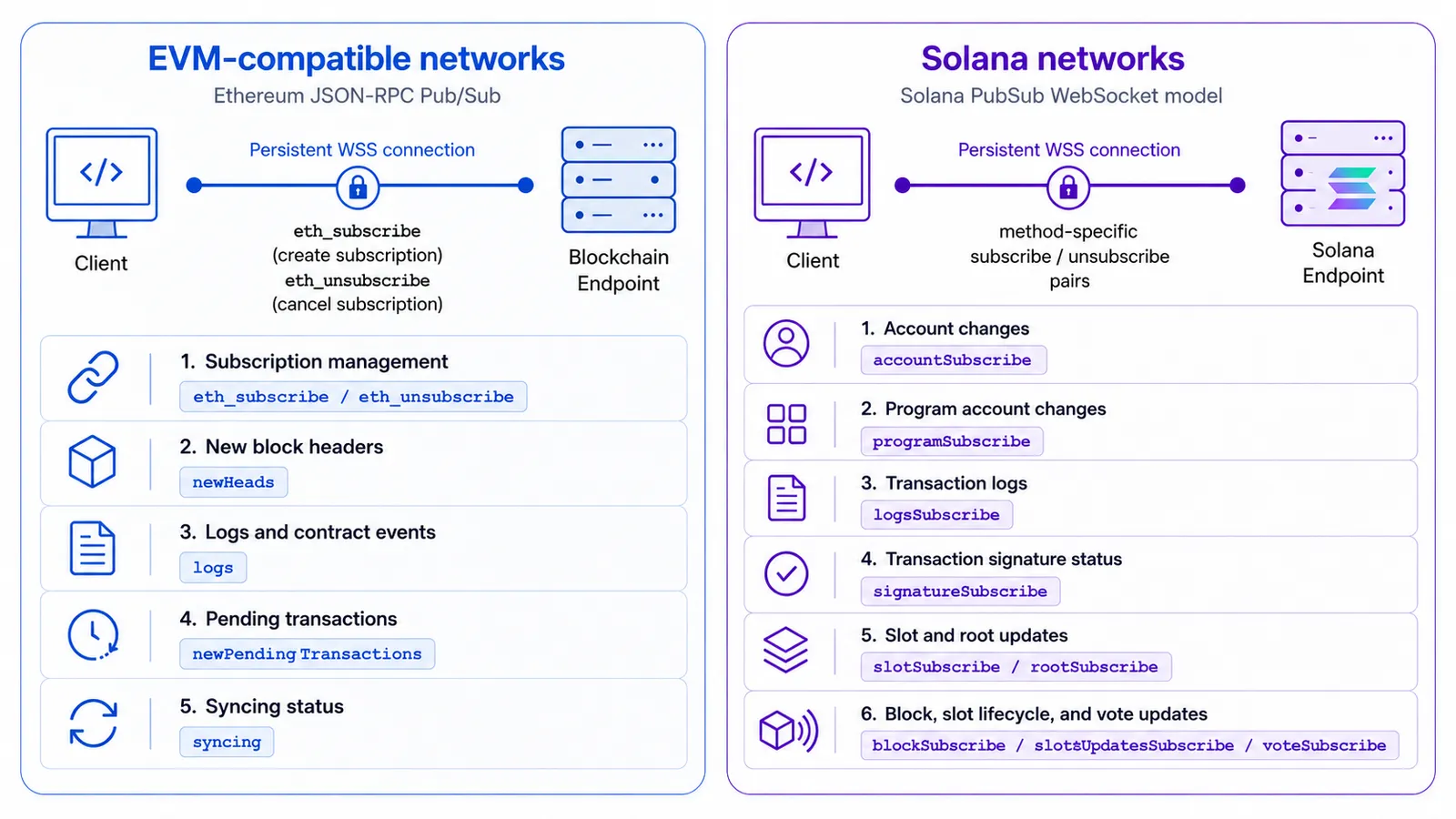
EVM Networks
EVM-compatible networks follow the Ethereum JSON-RPC Pub/Sub model for real-time event subscriptions. Clients create subscriptions with eth_subscribe and cancel them with eth_unsubscribe.
Supported subscription types can include new block headers, logs and contract events, pending transactions, and syncing status updates, depending on the network and endpoint configuration.
Solana Networks
Solana networks follow the Solana PubSub WebSocket model for real-time event subscriptions. Clients create and cancel subscriptions using method-specific subscription and unsubscription pairs.
Supported subscription types can include account changes, program account updates, transaction logs, signature status, slot and root updates, block updates, slot lifecycle events, and vote updates, depending on the endpoint configuration.